
The first column
Two operators publish a coin count. The rest show logos or headline coins.
Every crypto casino front page shows a row of coin logos. Of the 10 operators read here, 3 publish a list you can count and 7 do not, and a logo strip is a piece of decoration rather than a statement about what the house will accept.

| Casino | Coins listed | Ceiling on the way out | Licence | Visit |
|---|---|---|---|---|
| VaveOur pick | 6 | from 50,000 USDT split into instalments clause 8.8 | Curaçao Gaming Authority | Go to siteDetails |
| Bitcasino.io | not read | 1,000,000 USDT a week clause 6.10 | Curaçao Gaming Authority | Go to siteDetails |
| Empire.io | not read | not published | Anjouan Gaming Board licence bars NL | Go to siteDetails |
| Bitsler | not read | not published | Curaçao Gaming Authority | Go to siteDetails |
| Cloudbet | 40 | not published | Curaçao Gaming Authority | Go to siteDetails |
| CoinCasino | not read | 500,000 EUR a month clause 9.6 | Anjouan Gaming Board licence bars NL | Go to siteDetails |
| Rakebit | 15 | 10,000 EUR a day clause number not recorded | Anjouan Gaming Board licence bars NL | Go to siteDetails |
| Primedice | not read | not published | Government of Curaçao | Go to siteDetails |
| Stake | not read | not published | Curaçao Gaming Authority | Go to siteDetails |
| BetPlays | not read | 5,000 EUR a week clause 6.11 | not published | Go to siteDetails |


A logo strip is not a list
The row of coin symbols under the hero image of a crypto casino is the most reproduced element in the industry. It signals breadth without committing to anything: the logos are images, they are not numbered, they are not dated, and they appear nowhere in the terms that govern the account.
A published list is a different object. It has a count, it names assets, and it lives somewhere a reader can point at. Of the ten operators read for this site, three publish something of that kind and seven do not.
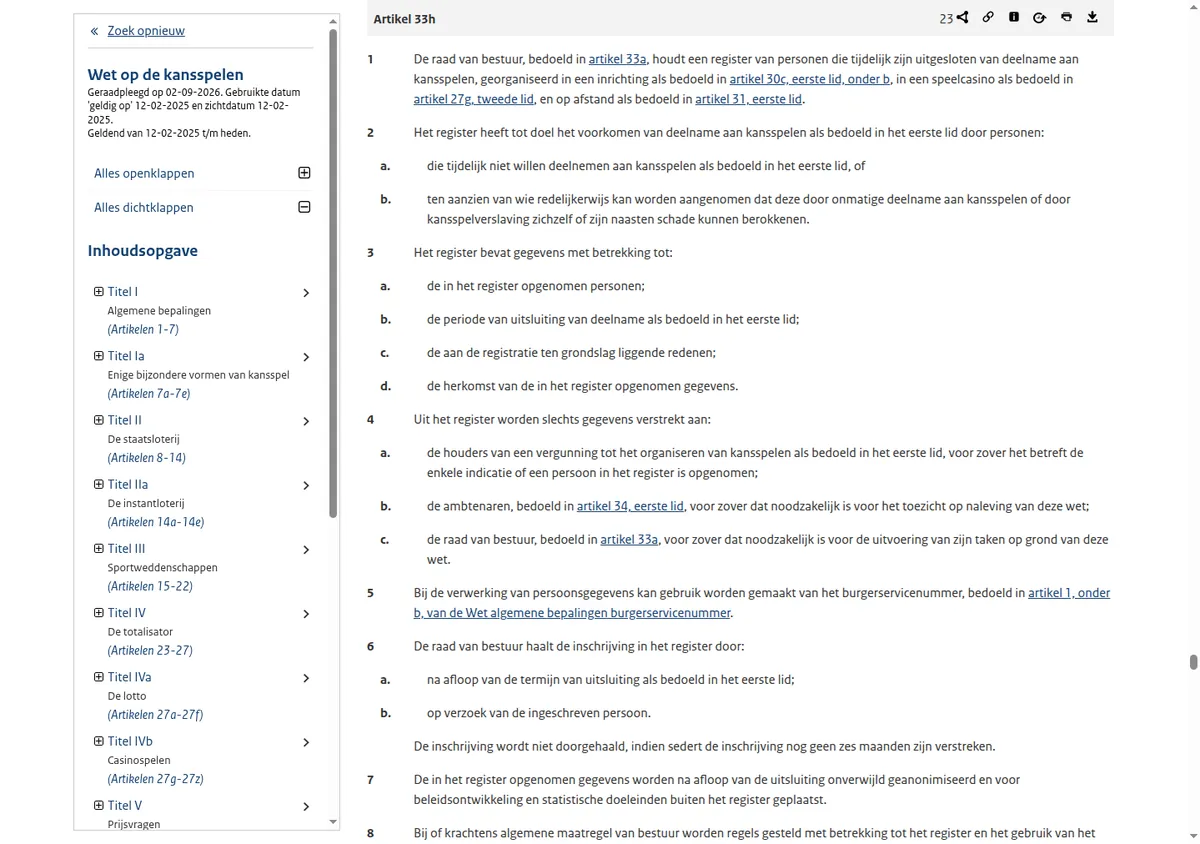
Paragraph 4 sub a is the sentence that explains the phrase casino zonder Cruks. Data from the register go to holders of a Dutch licence and to nobody else, so an operator without one is not withholding a check — it has no lawful way to make it.
The three that publish a count
Vave gives 2022 as its launch year and holds Curaçao Gaming Authority licence OGL/2024/1676/0905, held by Latcas B.V. and recorded Active. That licence line took two attempts: read on 25 August 2026 it carried no identifier at all, and the number came out of the issuing register when it was searched again on 2 September 2026.
Cloudbet publishes forty coins, and names BTC, BCH, ETH, USDT, USDC and USDP among them. It is the widest published list in this set by a considerable margin, and its composition is as interesting as its size: three dollar stablecoins from three different issuers alongside three volatile assets. Cloudbet is also one of the older operators here, with 2013 given as its launch year, and it holds a Curaçao Gaming Authority licence numbered OGL/2024/328/0599, recorded as Active. List width and list composition are two separate entries in the best crypto casino comparison.
Rakebit publishes fifteen, naming BTC, ETH, SOL, LTC, USDT and USDC. It is the newest operator in the set, with 2024 given as its launch year, and it holds an Anjouan Gaming Board licence numbered ALSI-202602030-FI2.
All three lists mix volatile assets with dollar stablecoins, which means the choice covered on the stablecoin page is genuinely available at those three. Three published lists out of ten is a thin result, and it is the result. It is also worth noting what neither list contains: a network. Naming USDT says nothing about whether the token is accepted on one chain or four, and that omission is the difference between a successful deposit and one that lands where nobody is standing. The networks and addresses page covers what that gap does.
The seven blanks, and what they are not
Bitcasino.io, Empire.io, Bitsler, CoinCasino, Primedice, Stake and BetPlays publish no coin count that could be read, and the comparison table records not published for each of them.
That phrase means one thing only: we looked and did not find a figure to cite. It does not mean zero coins, it does not mean few coins, and it does not mean the operator is hiding something. Several of these are among the best-known crypto-native gambling sites in existence and obviously accept a range of assets. What they do not do is publish a countable list in a document that can be quoted.
The temptation to fill those seven cells is strong, because a table with three figures and seven blanks looks like unfinished work while a table with ten figures looks like a finished job. The finished-looking version would be built from numbers scraped off other comparison sites, which got them from earlier comparison sites, which got them from a logo strip somebody counted in a screenshot years ago. Numbers built that way survive long after they stop being true, because nothing in their appearance says where they came from. The blanks stay.
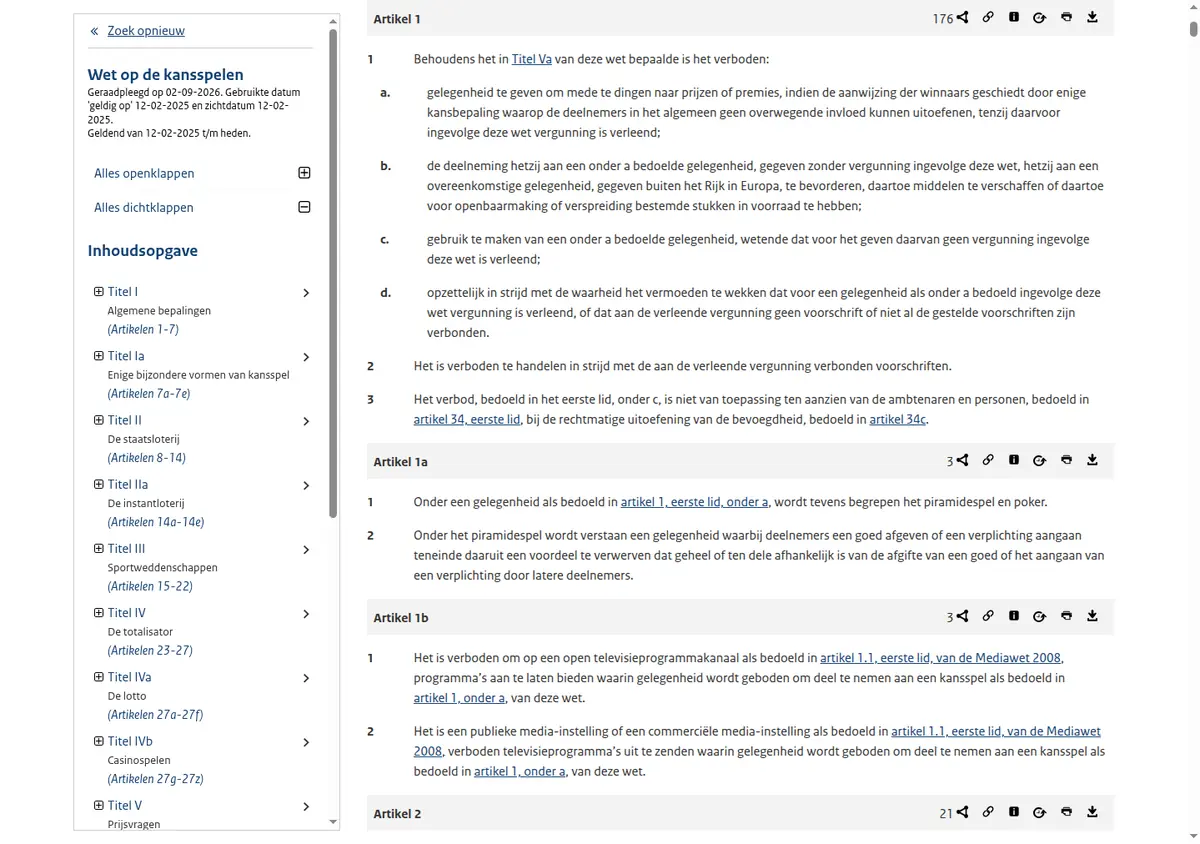
Sub a forbids offering a game of chance without a licence under this Act. Sub c forbids using such an opportunity while knowing that no licence was granted. Two prohibitions, two different addressees, and almost every Dutch comparison page quotes only the first.
What the blanks correlate with, and what they do not
It is tempting to read a missing coin list as a sign of an operator that publishes little in general. In this set that is only half true, and the half it is wrong about is instructive.
Bitcasino.io publishes no coin count, and it publishes more than almost anyone else in this set about the things that matter at the exit: a withdrawal ceiling of one million USDT a week in clause 6.10, and a verification threshold of 2 500 EUR in clause 6.6, plus a Curaçao Gaming Authority licence numbered OGL/2023/111/0069 recorded as Active. An operator can be silent about the entrance and specific about the exit.
Stake, Bitsler and Primedice all publish a verification rule with a clause number and hold a named licence — Stake at OGL/2024/1451/0918, Bitsler at OGL/2024/930/0387, both Curaçao Gaming Authority and both recorded as Active, and Primedice naming 8048/JAZ from the Government of Curaçao with no status recorded. None of the three publishes a coin count. Again: silence in one place, specificity in another.
And the reverse holds too, on the row where it costs us most to say so. It publishes no verification threshold, so its cell reads case by case and documents can be demanded at any amount, under clause 8.7. Whether it accepts players from the Netherlands could not be verified from its own country list either. A long coin list does not make up for either of those, and the commercial arrangement does not remove them from the page.
The same row also carries the one correction this site has had to make. Its licence cell read no number given from 25 August 2026 until 2 September 2026, when a second search of the Curaçao register produced OGL/2024/1676/0905 in the name of Latcas B.V.
Why the coin count is in the table at all
A column that only three of ten rows can fill is close to the threshold at which a column stops being worth its space. It stays for two reasons.
The first is that it is the one column on this site describing the way in rather than the way out, and a site about the payment route that only described withdrawals would be half a site.
Comparison only works where the compared parties actually differ, and here three of them do. A column where every row said the same thing would earn its removal; a column where the top and bottom published figures differ by a factor of six does not.
What this page does not claim
It does not claim that a longer list is better.
It does not claim that any of the seven blank operators accepts few coins, or many. It claims that no figure was found, which is a fact about the search and about what the operator chose to publish, and it is written that way deliberately.
Which of those coins is worth holding while it sits in an account is a different question from how many are accepted, and it is worked through under stablecoin or volatile coin. How euros become any of them in the first place is set out under iDEAL and euros.